
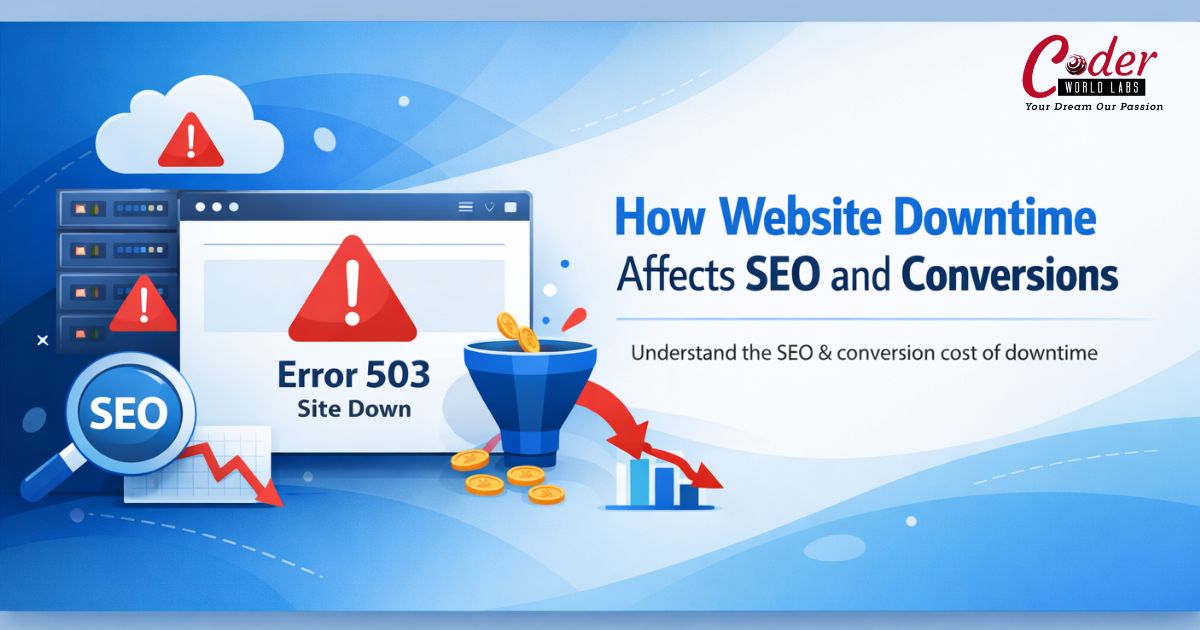
Website performance plays a critical role in search visibility, user confidence, and revenue consistency. When a website becomes unavailable, even for a short period, it disrupts search engine access and user journeys. Over time, these disruptions can weaken rankings, reduce traffic, and lower conversions. For businesses working with a reliable SEO agency in India, understanding how downtime impacts both SEO and commercial performance is essential for long-term growth.
In the early stages of an outage, the effects of website downtime on SEO begin to surface through crawl failures, unstable rankings, and reduced user engagement. Search engines expect consistent accessibility, and users expect uninterrupted service. When both expectations are unmet, organic performance and conversion metrics decline together.
Understanding Website Downtime from a Technical Perspective
Website downtime refers to any period when a website cannot be accessed by users or search engine crawlers. This may happen due to server failures, hosting limitations, DNS issues, or software-level conflicts.
Common forms of downtime include:
- Complete server unavailability.
- Pages loading partially or incorrectly.
- Database connection failures.
- CDN or DNS-related interruptions.
Each type of outage creates a different level of server downtime SEO impact, but all of them affect search visibility and user trust. Search engines rely on stable access to crawl and evaluate websites. When bots encounter repeated failures, crawl frequency is gradually reduced.
Website Downtime SEO Impact on Search Engine Crawling
Search engines assign crawl budgets based on how reliable a website appears over time. When crawlers repeatedly face errors such as timeouts or server failures, they reduce crawling activity.
Key crawling-related impacts include:
- Increased crawl errors in Search Console.
- Delayed indexing of new or updated pages.
- Limited exploration of internal links.
The SEO impact of website downtime becomes more severe when outages are frequent or prolonged. Extended downtime often results in longer recovery periods before normal crawling resumes.
How Downtime Influences Search Rankings
Search ranking systems continuously monitor website accessibility. Pages that return error responses or fail to load send negative reliability signals.
Ranking-related consequences may include:
- Loss of keyword positions.
- Slower ranking improvements after updates.
- Google ranking loss due to downtime during repeated outages.
This explains how downtime impacts search rankings even when no content or backlink changes are made.
Downtime Effects on Organic Traffic
Organic traffic depends on stable indexing and consistent ranking presence. When downtime interrupts crawling or weakens ranking signals, traffic levels drop.
Common downtime effects on organic traffic include:
- Sudden reduction in search impressions.
- Lower click through rates.
- Long term traffic decline for competitive keywords.
Search engines favor dependable websites. Sites that experience repeated outages often struggle to regain previous traffic performance.
Website Downtime and Conversion Performance Breakdown
Conversions rely on smooth, uninterrupted user journeys. Downtime breaks these journeys, leading to abandoned actions and lost opportunities.
Website downtime and conversions are closely connected through:
- Interrupted checkout processes.
- Failed form submissions.
- Payment gateway timeouts.
Even short disruptions increase friction and reduce user confidence. Over time, this leads to lower conversion intent and declining sales performance.
Website Downtime Bounce Rate and User Behavior Signals
Most users do not retry a website that fails to load. When a page becomes inaccessible, visitors leave immediately.
Behavioral signals affected by downtime include:
- Increased website downtime bounce rate.
- Shorter session durations.
- Reduced repeat visits.
These patterns reflect a poor website downtime user experience, which search engines interpret as reduced user satisfaction.
Website Availability and SEO Relationship
Website availability is a foundational SEO signal. Search engines prefer sites that remain consistently accessible.
Strong website availability and SEO alignment support:
- Reliable crawl scheduling.
- Faster discovery of new content.
- Stable ranking performance.
Maintaining high uptime protects both search visibility and brand credibility.
Site Outage SEO Consequences for Revenue
Revenue impact is immediate during outages, especially for e-commerce platforms and lead-driven businesses.
Financial consequences include:
- Direct website downtime revenue loss.
- Missed sales and lead opportunities.
- Long-term damage to brand trust.
Extended outages can influence future buying decisions and weaken overall revenue potential.
Technical SEO Signals Disrupted During Downtime
Downtime affects several technical SEO signals that contribute to ranking stability.
Key elements impacted include:
- HTTP status code consistency.
- Internal link equity flow.
- Structured data accessibility.
When outages repeat, these disruptions compound into long-lasting site outage SEO consequences.
How to Recover SEO After Website Downtime
SEO recovery requires a structured approach rather than quick fixes. Search engines need consistent signals that stability has returned.
Effective steps to recover SEO after website downtime include:
- Confirming server stability through hosting and log reviews.
- Resubmitting updated sitemaps after uptime restoration.
- Monitoring crawl error reduction.
- Tracking ranking recovery over several weeks.
Clear uptime patterns help rebuild crawl trust and ranking confidence.
Role of a Professional SEO Partner
While technical teams may restore servers, SEO recovery requires strategic oversight. Partnering with an experienced SEO agency in India ensures infrastructure stability aligns with search performance goals.
At Coder World Labs, technical audits focus on uptime history, crawl behavior, and performance recovery. The approach combines infrastructure analysis with longer-term organic growth planning.
Monitoring and Prevention Best Practices
Preventive monitoring helps reduce long-term damage from outages.
Effective prevention strategies include:
- Real-time uptime monitoring tools.
- Server performance alerts.
- Load testing before major updates.
These practices reduce server downtime and SEO impact and protect conversion flow.
Why Brands Choose Coder World Labs for Stability-Focused SEO
Search performance depends on more than keywords and backlinks. Stability, accessibility, and technical precision drive sustainable growth.
Coder World Labs helps brands reduce outage risks and strengthen organic performance through infrastructure-aligned SEO strategies. Businesses focused on predictable growth often work with Coder World Labs to protect rankings, traffic, and revenue.
A consultation with Coder World Labs supports proactive monitoring, structured recovery planning, and long-term organic visibility without ranking instability.
Website reliability directly influences search visibility, user trust, and revenue consistency. Addressing downtime through proactive monitoring and structured technical SEO planning ensures stable, resilient, and predictable growth.